
Artificial intelligence (AI) is no longer a futuristic concept—it is already reshaping how we work, hire, and build careers. Between 2026 and 2030, the impact of AI on jobs will accelerate dramatically, influencing nearly every industry worldwide. However, the reality is far more complex than the simple idea that “AI will replace jobs.” Instead, AI will transform work, automate tasks, and create new opportunities at the same time.
- The Big Picture: AI Will Transform, Not Just Replace Jobs
- Key Statistics: AI Job Impact by 2026–2030
- Industries That Will Be Most Affected
- 1. Office & Administrative Jobs
- 2. Finance & Professional Services
- 3. Manufacturing & Logistics
- 4. Creative Industries
- 5. Skilled Trades & Physical Jobs
- Jobs Most at Risk (2026–2030)
- Jobs That Will Grow in Demand
- The Rise of AI-Augmented Jobs
- Four Possible Futures of Jobs by 2030
- Skills You Need to Survive the AI Era
- How AI Will Impact Salaries and Work Culture
- Top Google Searches Related to “How Will Artificial Intelligence Affect Jobs 2026–2030”
- FAQs: Artificial Intelligence and Jobs
- 1. Will AI replace most jobs by 2030?
- 2. Which jobs are safest from AI?
- 3. How many jobs will AI create?
- 4. Is AI a threat or an opportunity?
- 5. What should I study to prepare for AI jobs?
- Conclusion
This in-depth guide explores exactly how AI will affect jobs from 2026 to 2030, based on current research, trends, and expert insights.
The Big Picture: AI Will Transform, Not Just Replace Jobs
One of the biggest misconceptions about AI is that it will eliminate entire professions. In reality, AI mainly targets specific tasks within jobs, not entire roles.
For example:
- AI can handle repetitive data entry
- It can generate reports or summaries
- It can automate customer support responses
But humans still play a crucial role in:
- Decision-making
- Creativity and innovation
- Emotional intelligence and communication
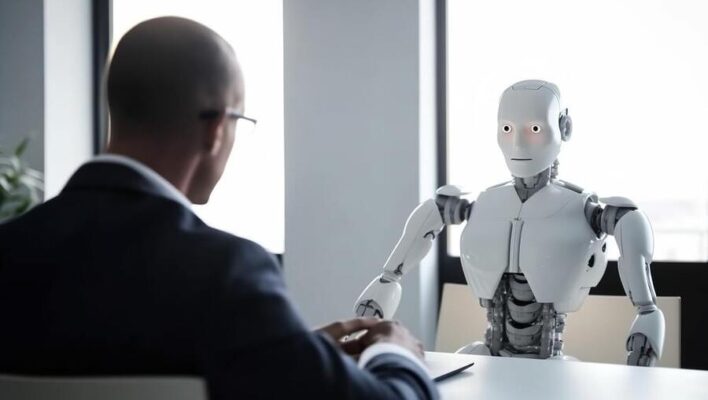
This means most jobs will evolve into hybrid roles, where humans work alongside AI tools rather than being replaced by them.
Key Statistics: AI Job Impact by 2026–2030
Understanding the numbers helps clarify the scale of change:
- Around 85 million jobs may be displaced by AI by 2026, according to global estimates
- By 2030, up to 30% of jobs could be automated in some form
- AI could contribute $13 trillion to the global economy by 2030
- About 70% of companies are expected to adopt AI technologies by 2030
At the same time, recent research shows that only a portion of jobs face high risk, and many roles will be redesigned rather than eliminated.
Industries That Will Be Most Affected
1. Office & Administrative Jobs
These roles are among the most vulnerable because they involve repetitive, rule-based tasks.
High-risk roles include:
- Data entry clerks
- Bookkeeping assistants
- Customer support agents
AI tools can already handle these functions faster and more accurately.
2. Finance & Professional Services
AI will automate:
- Risk analysis
- Fraud detection
- Financial forecasting
However, jobs won’t disappear entirely. Instead, professionals will shift toward:
- Strategic decision-making
- Client advisory roles
- Complex analysis
3. Manufacturing & Logistics
Automation and robotics will continue to grow in:
- Assembly lines
- Warehousing
- Supply chain management
Repetitive physical tasks will decline, but technical roles managing machines will increase.
4. Creative Industries
Contrary to fears, AI won’t replace creativity—but it will change how it works.
AI can:
- Generate content
- Assist in design
- Speed up production
But humans will still lead in:
- Original ideas
- Branding
- Storytelling
Experts argue AI will help creators produce higher-quality work faster, not eliminate them.
5. Skilled Trades & Physical Jobs
Traditionally considered “safe,” even trade jobs may face disruption over time.
- Robotics may handle inspections and repairs
- AI tools will assist in diagnostics
However, these roles are likely to remain in demand longer due to their physical nature—though partial automation is expected.
Jobs Most at Risk (2026–2030)
Jobs most likely to be affected share common traits:
- Repetitive tasks
- Predictable workflows
- Minimal human interaction
Examples include:
- Data entry operators
- Telemarketers
- Basic customer service roles
- Routine manufacturing jobs
These roles are easier for AI to automate because they follow clear rules and require limited creativity.
Jobs That Will Grow in Demand
While some jobs decline, others will grow rapidly.
High-demand roles include:
- AI specialists & machine learning engineers
- Data analysts and scientists
- Cybersecurity experts
- Healthcare professionals
- Renewable energy technicians
These roles require:
- Critical thinking
- Technical expertise
- Human judgment
The Rise of AI-Augmented Jobs
The most important trend is the rise of AI-augmented work.
Instead of replacing workers, AI acts as a “co-pilot” that enhances productivity.
Examples:
- Marketers using AI for content generation
- Developers using AI to write code
- Analysts using AI to process large datasets
Workers who learn to use AI effectively will have a major advantage in the job market.
Four Possible Futures of Jobs by 2030
According to global research, there are multiple scenarios for how AI could shape employment:
- AI-Driven Growth – High productivity and job creation
- Co-Pilot Economy – Humans and AI work together
- Job Displacement Era – Rapid automation without reskilling
- Stalled Progress – Slow adoption and limited benefits
The outcome will depend on:
- Government policies
- Education systems
- Workforce adaptability
Skills You Need to Survive the AI Era
To stay competitive between 2026 and 2030, focus on these skills:
1. Digital & AI Literacy
Understand how AI tools work and how to use them effectively.
2. Critical Thinking
AI provides data—but humans make decisions.
3. Creativity
Original thinking remains uniquely human.
4. Emotional Intelligence
Leadership, communication, and empathy cannot be automated.
5. Adaptability
The ability to learn new skills quickly will be essential.
How AI Will Impact Salaries and Work Culture
AI will also reshape how people work:
Positive Impacts:
- Increased productivity
- More flexible work environments
- New career opportunities
Challenges:
- Job displacement in certain sectors
- Wage inequality between skilled and unskilled workers
- Need for constant upskilling
Top Google Searches Related to “How Will Artificial Intelligence Affect Jobs 2026–2030”
Here are popular related search queries:
- Will AI replace jobs by 2030?
- Which jobs are safe from AI in the future?
- What jobs will AI create in 2026?
- How many jobs will AI take in the next 5 years?
- Is AI good or bad for employment?
- Future jobs in demand after AI
- Which careers are most at risk from AI?
- How to prepare for AI job changes
FAQs: Artificial Intelligence and Jobs
1. Will AI replace most jobs by 2030?
No, AI will not replace most jobs entirely. Instead, it will automate specific tasks and transform roles. Many jobs will evolve rather than disappear.
2. Which jobs are safest from AI?
Jobs that require:
- Human interaction
- Creativity
- Complex problem-solving
Examples include healthcare, education, and leadership roles.
3. How many jobs will AI create?
While millions of jobs may be displaced, AI is also expected to create new roles in technology, data, and emerging industries—balancing the impact over time.
4. Is AI a threat or an opportunity?
AI is both. It can disrupt certain jobs but also create new opportunities. The key is adapting and learning new skills.
5. What should I study to prepare for AI jobs?
Focus on:
- Data science
- Artificial intelligence
- Programming
- Business analytics
- Soft skills like communication and leadership
Conclusion
Between 2026 and 2030, artificial intelligence will fundamentally reshape the global job market. While some roles will disappear, many more will evolve, and entirely new careers will emerge. The real impact of AI is not job destruction—it is job transformation.
The future belongs to those who:
- Embrace AI tools
- Continuously learn new skills
- Adapt to change
Instead of fearing AI, the smartest approach is to work with it.