
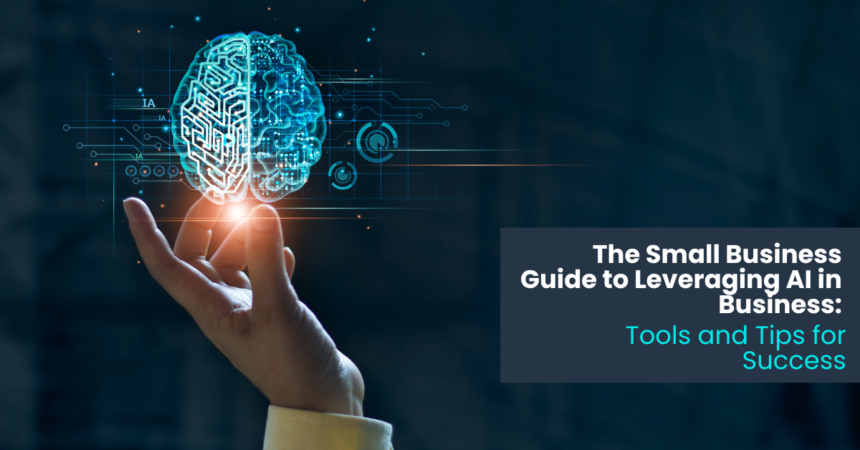
Artificial Intelligence (AI) is no longer a futuristic concept reserved for tech giants—it’s a practical, accessible tool that small businesses can use today to grow faster, work smarter, and compete effectively. This small business guide to AI will walk you through what AI is, why it matters, and how to implement it step by step—without overwhelming your budget or team.
- What Is AI and Why Does It Matter for Small Businesses?
- Key Benefits of AI for Small Businesses
- 1. Increased Efficiency and Productivity
- 2. Cost Savings
- 3. Better Decision-Making
- 4. Improved Customer Experience
- 5. Competitive Advantage
- Real-World Uses of AI in Small Businesses
- ✔ Customer Support Automation
- ✔ Marketing and Content Creation
- ✔ Sales and Lead Generation
- ✔ Inventory and Operations Management
- ✔ Financial Management
- Step-by-Step Guide to Implement AI in Your Small Business
- Step 1: Identify Your Pain Points
- Step 2: Start Small
- Step 3: Choose the Right Tools
- Step 4: Train Your Team
- Step 5: Measure Results
- Step 6: Scale Gradually
- Common Challenges (and How to Overcome Them)
- Future of AI for Small Businesses
- Top Google Searches Related to “A Small Business Guide to AI”
- Frequently Asked Questions (FAQs)
- 1. What is the best AI tool for small businesses?
- 2. Is AI expensive for small businesses?
- 3. Can AI replace employees?
- 4. How can AI help increase sales?
- 5. Is AI difficult to use?
- 6. How long does it take to see results from AI?
- 7. What industries benefit most from AI?
- Final Thoughts
What Is AI and Why Does It Matter for Small Businesses?
At its core, AI refers to computer systems that can perform tasks that typically require human intelligence—such as decision-making, language processing, and data analysis.
For small businesses, AI has become a game-changer because it allows you to do more with fewer resources. Whether you’re running an online store, a service agency, or a local business, AI can automate tasks, improve customer experience, and provide valuable insights.
According to industry data, 91% of small businesses using AI report revenue growth, highlighting its direct impact on success.
Key Benefits of AI for Small Businesses
1. Increased Efficiency and Productivity
AI automates repetitive tasks like scheduling, data entry, and email responses. This frees up time so you can focus on strategy and growth.
2. Cost Savings
Instead of hiring multiple employees, AI tools can handle tasks like customer support, content creation, and analytics—reducing operational costs.
3. Better Decision-Making
AI analyzes large amounts of data quickly, helping you identify trends, customer behavior, and opportunities.
4. Improved Customer Experience
AI-powered chatbots and automation tools provide instant responses, improving customer satisfaction and engagement.
5. Competitive Advantage
AI allows small businesses to compete with larger companies by improving efficiency, marketing, and personalization.
Real-World Uses of AI in Small Businesses
AI isn’t just theory—it’s already transforming how small businesses operate daily.
✔ Customer Support Automation
AI chatbots answer FAQs instantly, reducing response time and improving service.
✔ Marketing and Content Creation
AI can generate blog posts, social media captions, product descriptions, and ad copy.
✔ Sales and Lead Generation
AI tools analyze customer data to identify high-quality leads and improve conversion rates.
✔ Inventory and Operations Management
AI predicts demand, manages stock, and optimizes supply chains.
✔ Financial Management
AI tools track expenses, detect fraud, and forecast cash flow.
A Reddit user summarized it well:
“Small businesses don’t need enterprise AI… they need simple automation that saves time.”
Step-by-Step Guide to Implement AI in Your Small Business
Step 1: Identify Your Pain Points
Start by asking:
- What tasks take the most time?
- Where are you losing money or efficiency?
- Which processes are repetitive?
Focus on one problem at a time.
Step 2: Start Small
You don’t need a full AI transformation. Begin with simple tools like:
- Chatbots
- Email automation
- AI writing assistants
Experts recommend testing low-cost tools before scaling.
Step 3: Choose the Right Tools
Look for AI tools that are:
- Easy to use
- Affordable
- Scalable
Modern AI tools are designed for non-technical users, making adoption easier than ever.
Step 4: Train Your Team
AI is only effective if your team knows how to use it. Provide basic training and encourage experimentation.
Step 5: Measure Results
Track key metrics such as:
- Time saved
- Cost reduction
- Customer satisfaction
- Revenue growth
This helps you understand ROI and refine your strategy.
Step 6: Scale Gradually
Once you see results, expand AI into other areas of your business.
Common Challenges (and How to Overcome Them)
1. Lack of Knowledge
Many small businesses struggle because they don’t know where to start.
Solution: Start with simple use cases and learn gradually.
2. Cost Concerns
AI is often perceived as expensive.
Reality: Many tools are affordable or free for small businesses.
3. Integration Issues
Some businesses face difficulties integrating AI into existing workflows.
Solution: Choose tools that integrate easily with your current systems.
4. Trust and Accuracy
AI isn’t perfect and requires human oversight.
Solution: Use AI as an assistant, not a replacement.
Future of AI for Small Businesses
AI adoption is growing rapidly, and its capabilities are expanding. Today, small businesses can access tools that were once limited to large corporations.
Future trends include:
- Personalized customer experiences
- Predictive analytics
- Voice and conversational AI
- Automated business workflows
Businesses that adopt AI early will have a significant competitive edge.
Top Google Searches Related to “A Small Business Guide to AI”
Here are popular search queries people are looking for:
- AI tools for small business
- How to use AI in small business
- Best AI software for startups
- AI marketing tools for small business
- Benefits of AI for small businesses
- AI automation for small business
- Free AI tools for entrepreneurs
- AI business ideas for beginners
- How to implement AI in business
- AI examples in small business
Frequently Asked Questions (FAQs)
1. What is the best AI tool for small businesses?
There is no one-size-fits-all tool. The best AI tool depends on your needs—marketing, customer support, or analytics. Start with simple tools like chatbots or AI writing assistants.
2. Is AI expensive for small businesses?
Not anymore. Many AI tools offer free or low-cost plans, making them accessible even for startups.
3. Can AI replace employees?
No. AI is designed to assist, not replace. It handles repetitive tasks so employees can focus on more valuable work.
4. How can AI help increase sales?
AI improves lead generation, personalizes marketing, and enhances customer experience—all of which boost sales.
5. Is AI difficult to use?
Modern AI tools are user-friendly and require little to no technical knowledge.
6. How long does it take to see results from AI?
Some benefits, like time savings, can be seen immediately. Others, like revenue growth, may take a few months.
7. What industries benefit most from AI?
Almost every industry—including retail, healthcare, finance, and marketing—can benefit from AI.
Final Thoughts
AI is no longer optional for small businesses—it’s becoming essential. From automating tasks to improving customer experience, AI offers powerful tools to help you grow efficiently.
The key is simple: start small, focus on real problems, and scale gradually. With the right approach, AI can transform your small business into a smarter, more competitive operation in today’s digital world.